
Technology is changing news media

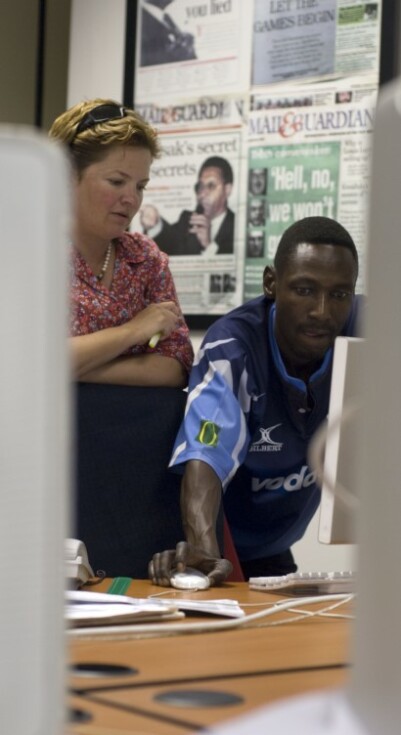
Image 211Technology developments are changing how media businesses operate. They are driving changes in how people access news and how they interact with media companies and each other. It seems old business models may no longer apply as cheap hardware, widespread Internet access and powerful mobile devices transform media consumption, revenues and production. At the same time, developments in print and broadcast technologies are revolutionising traditional media.

How can traditional media businesses in developing democracies compete in a hyper-competitive and uncertain digital world? To inform MDLF’s future work, we invited a small group of media technology experts to identify the key trends that are emerging and to outline the questions that everyone involved in supporting independent media in transitional countries needs to ask. Here is a selection of their findings.

Pro-am journalism – mixing professional and amateur content
The one-way nature of traditional media – one media company delivering a single news product to lots of customers – is changing as technology makes it possible for audiences not only to react to stories but also to report on them. The expansion of the Internet and affordable mobile phones with audio, photo and video functions are fuelling pro-am journalism, a combination of professional and consumer-produced content.

Encouraging this type of interactivity not only meets the demands of readers, listeners and viewers to participate in the media process, it can also improve the quality of reporting. First-hand testimony, photos and video footage of major news events such as the 7/7 bombings in London and the Asian tsunami have added value to reporting that professional journalists alone could not have produced.

Will filters reinforce fragmentation?
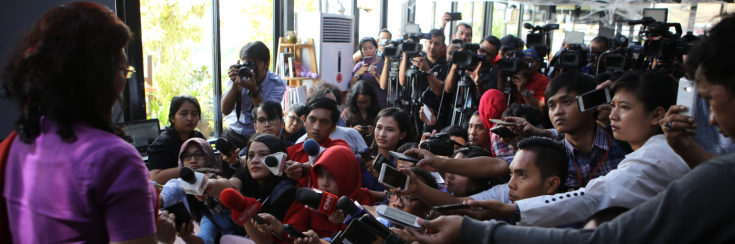
Until recently, people were restricted to a small number of news outlets to find out what was going on in their communities and in the world. Now, as the number of information sources explodes, audiences are fragmenting into smaller and smaller groups and traditional mass media are being replaced by personalised news providers.

Increasingly, people want access to news that is tailored to their individual interests, meaning that the traditional model of providing a single “common interest” newspaper, radio or TV programme is breaking down. In the digital world, readers, listeners and viewers want to be able to access what information they want, where they want, when they want.

But will the growth in the use of filters to pre-select the type of information people receive lead to further fragmentation? And what impact will this “echo chamber effect”, where people only receive news that fits in with their existing opinions, have on democracy?

Power used to be speed of information – now it’s also speed of reaction
Closely related to the emergence of pro-am journalism is the ability of the public to react instantaneously to events through the media. Channelling discontent or reaction may increase the power of the press. For example, when Thai Prime Minister Thaksin Shinawatra claimed that only a handful of people were taking part in anti-government protests, members of the public sent photographs of the mass demonstrations from mobile phones to the media. News outlets published the photos proving that the authorities had been covering up the size of the protests and, ultimately, contributing to the fall of the government.

Image 227Will aggregation replace mediation?
There are signs that media companies may have to become aggregators or filters of information rather than simply content creators. Trends show that consumers increasingly use information providers which bring together news from more than one source, rather than turn to a media company that only provides its own reporting. Companies such as Google and Yahoo!, which “aggregate” information without creating original content, go one step further by cutting out all human editing and instead use algorithms to mechanically filter the news for their users.

As consumers leave behind the traditional mass media’s packaging of information and move towards whatever mix of content most precisely matches their individual needs and interests, media companies will have to face the challenge of incorporating news from other sources into their own product without undermining their brand.

Advertising budgets go online: But how do the media follow the money?
In 2006, advertisers in the UK spent more advertising online than in newspapers. The migration of advertising online is a trend that looks set to spread through developed markets to transitional countries.

Some figures from the US give an indication of the challenges that may lie ahead.

  • None of the top four online companies are media businesses.
  • The top 50 online companies share 95% of total advertising revenue – any company that is not part of this elite group faces intense competition for a share of only 5% of the revenue.
  • Competition for online ads is fierce: 40% of online ads currently go to search and 20% to classifieds.
If, as seems likely, the migration online becomes a worldwide trend, media companies in developing democracies will find that their slice of advertising revenues decreases significantly. News outlets will not only have to compete with each other for revenues, as they do now, but also with non-media companies. And as international giants such as Google and Yahoo! start implementing their “hyper-local” strategies to move into local markets, before long media businesses in emerging democracies may find themselves competing for advertising with some of the biggest companies in the world.

Image 228Audience and advertising fragmentation: Threat or opportunity?
As audiences fragment, media companies will have to generate revenue from the “long tail”, i.e. seek out smaller amounts of income from many niches and clusters of consumers. A similar problem is already faced by some media businesses in developing countries, where large corporations and multinationals may not advertise in independent news outlets for political reasons. The long tail trend is likely to be a worldwide phenomenon, though it may pose special problems in the developing world where many countries do not have effective mechanisms for collecting small amounts of revenue from many customers.

Diversification of revenue sources will become more important as advertising income is squeezed. Some publishers already generate revenue from sources ranging from providing pensions advice to selling electronic goods. The Times of India, for example, is the largest retailer of fridges in the country.

Leaps in technology are also happening in traditional media
At the same time as technology is driving developments in the digital world, rapid advances in traditional equipment are transforming production of old media. The quality of new digital presses is as high as any standard press and they are incredibly flexible – printing anything from newspapers to flyers – and can even print personalised newspapers. Some can be operated by only one person and there is no need for extensive training. There is a view that a digital press may be more cost effective than a traditional press for a print run of up to 50,000 copies. In two or three years, this could be as high as 100,000.

Technology developments also allow traditional media companies to enter the new media world through digitalisation and convergence of their workflow. Indeed, re-gearing the news production process to efficiently produce news for delivery over multiple platforms has become an imperative.

Will emerging markets leapfrog straight to the newest technology?
Many developing democracies lack old media infrastructure such as telephone cables. However, advances in new technology are allowing some countries to leapfrog an entire generation of technology. For example in Yemen, where the terrestrial telephone system is weak, a women’s NGO sends text message news alerts to mobile phones, bypassing telephone cables and government interference with content. In Jordan, Amannet skipped FM transmission (because the authorities refused to grant it a licence) and immediately broadcast via the Internet.

Three digital worlds may be emerging: developed, undeveloped and semi-developed. Leapfrogging technology may happen most in the “semi-developed” world, where countries such as Malaysia lack some traditional communications infrastructure but are experiencing a quick take-up of technology.

Thanks to:
Premesh Chandran, Malaysiakini.com, Malaysia
Vin Crosbie
, Digital Deliverance LLC, USA
Daoud Kuttab, Amannet, Jordan
Richard Landry, formerly Independent Press Association, USA
Andrew Lih, Academic and author, China
Allan Marshall, iMedia, France
Bertrand Pecquerie, World Editors Forum, France
Philippe Tarbouriech, MDLF Adviser, Switzerland
Ari Valjakka, Turun Sanomat, Finland
Zoran Zivkovic, Swedish Helsinki Committee for Human Rights, Serbia